
Fuji GX617
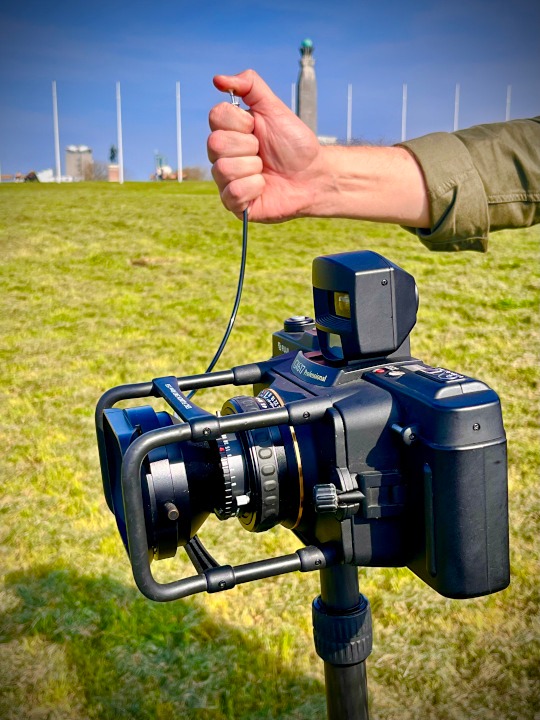
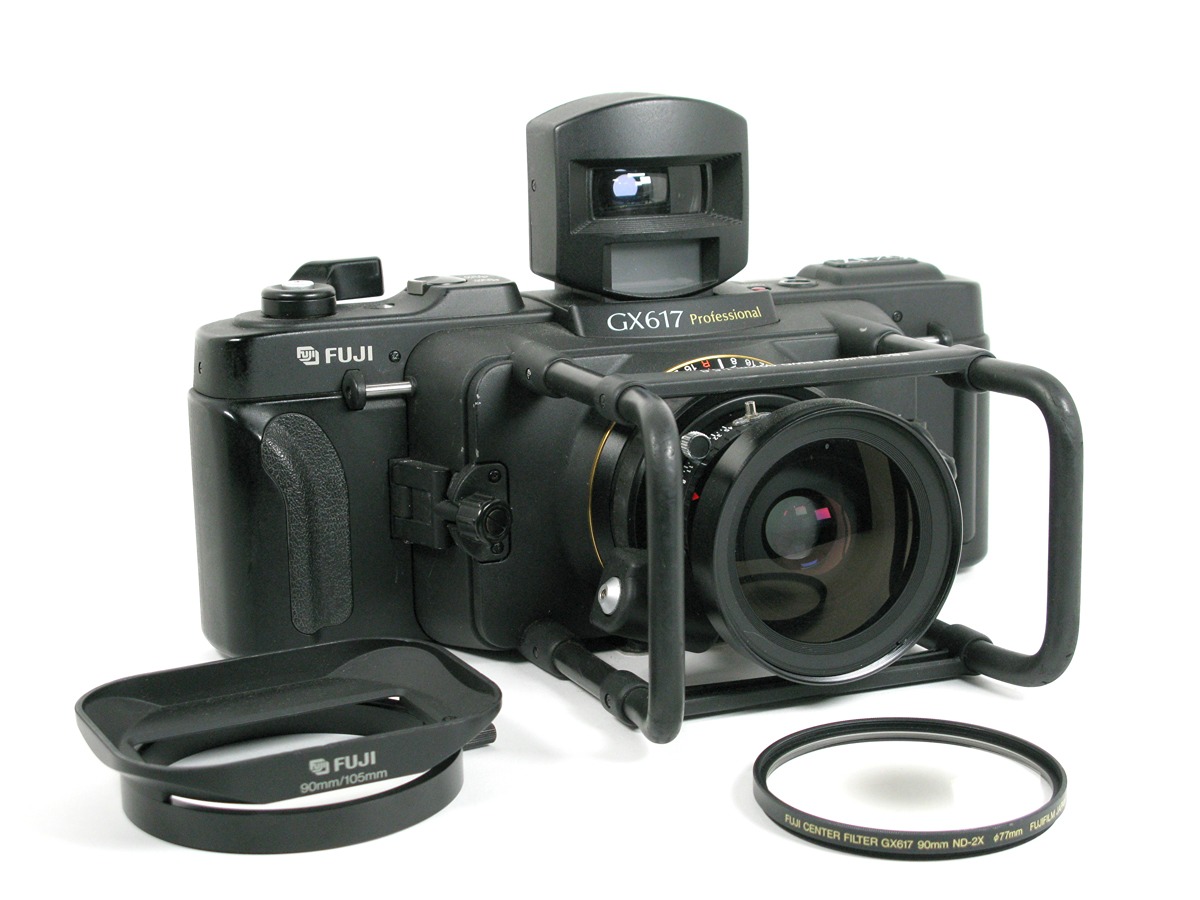
The Fuji GX617 Professional is one of those rare cameras that feels less like a tool and more like a deliberate commitment. It’s big, unapologetically mechanical (with electronic elements) and purpose built for a very specific kind of photography… sweeping, ultra wide panoramics on 120 film. Paired with the EBC Fujinon SWD 90mm f5.6 lens and dedicated 90mm viewfinder, it becomes a highly focused landscape machine.
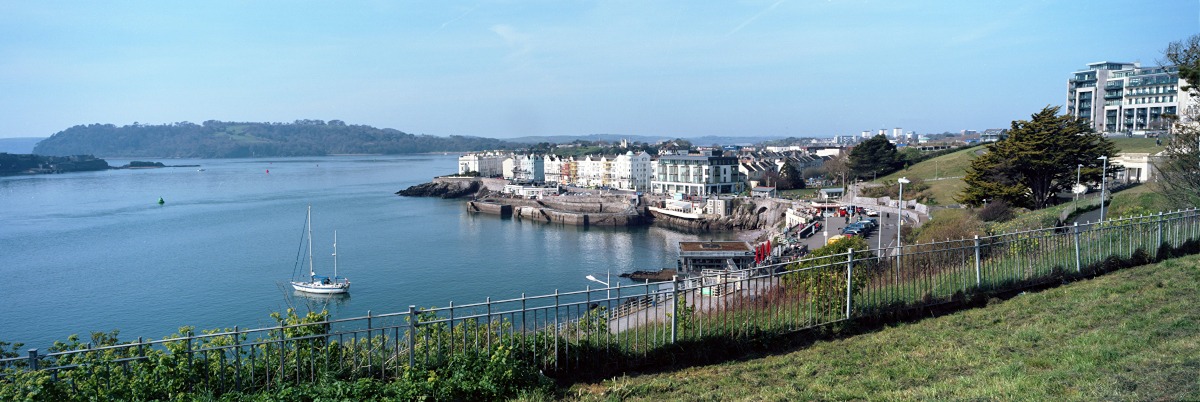
Released in the 1980s by Fujifilm, the GX617 was part of Fuji’s push into professional panoramic photography. Producing massive 6×17cm negatives (nearly three times the width of standard medium format) it quickly became a favourite amongst landscape photographers who wanted resolution and immersion that smaller formats simply couldn’t match. While the shutter itself is fully mechanical, the camera uses batteries to power an electromagnetic shutter release, however this isn’t something we tested.
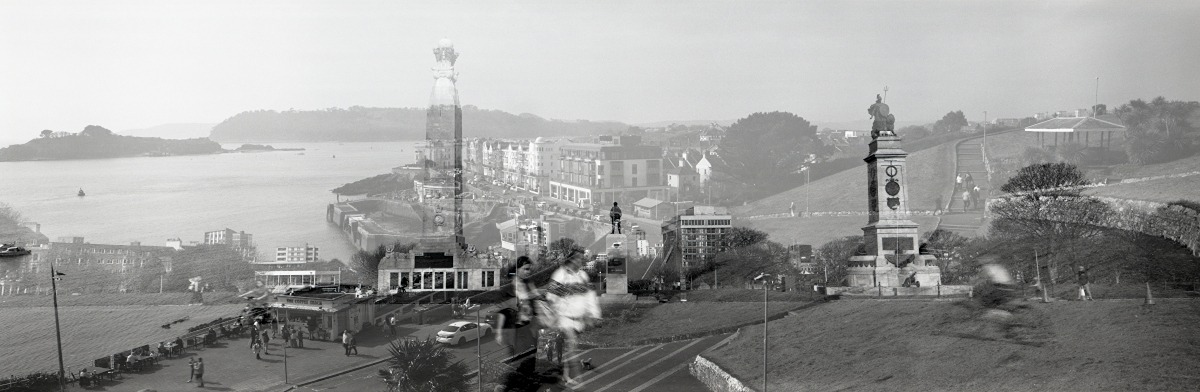
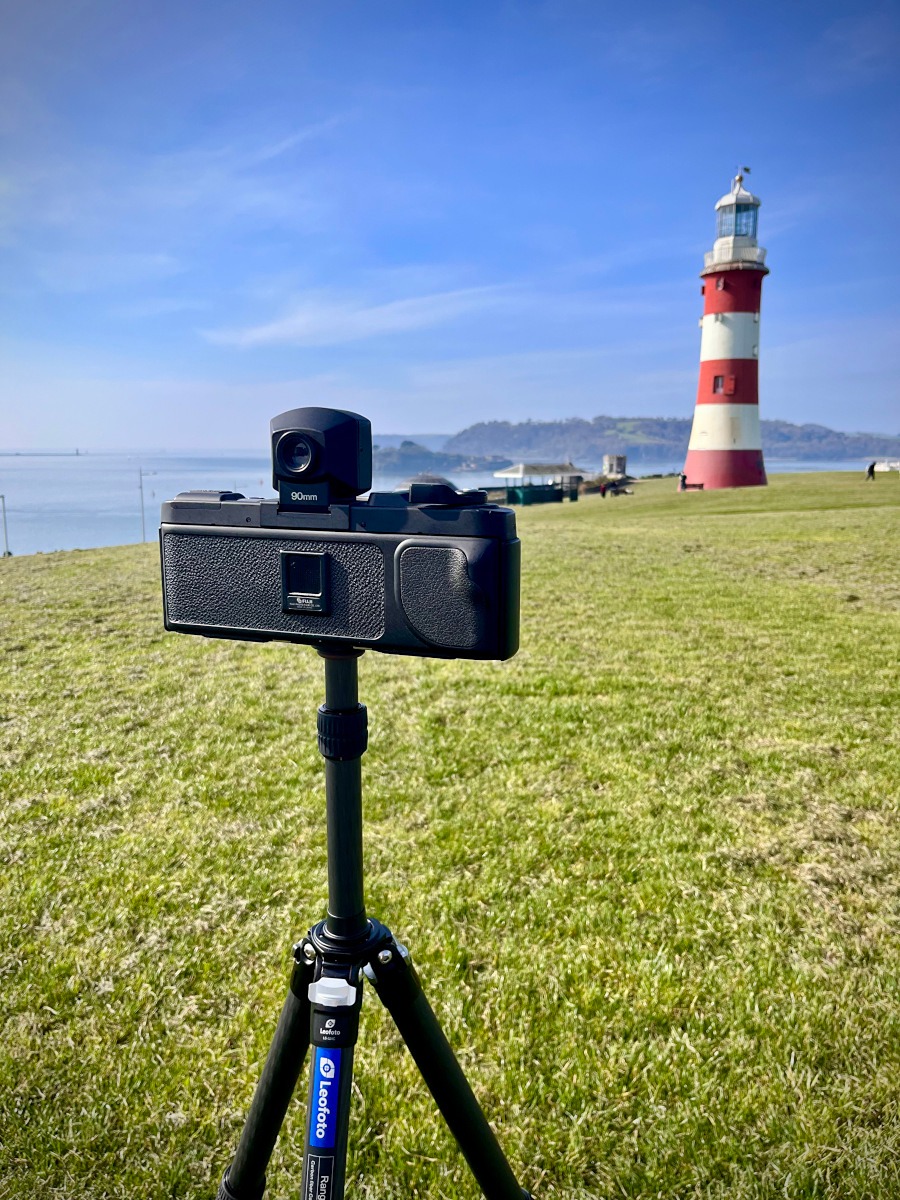
Taking the GX617 out to Plymouth Hoe, with local photographer Lloyd, felt like the perfect proving ground. The open coastal views and shifting light from the morning made it ideal for panoramic compositions.
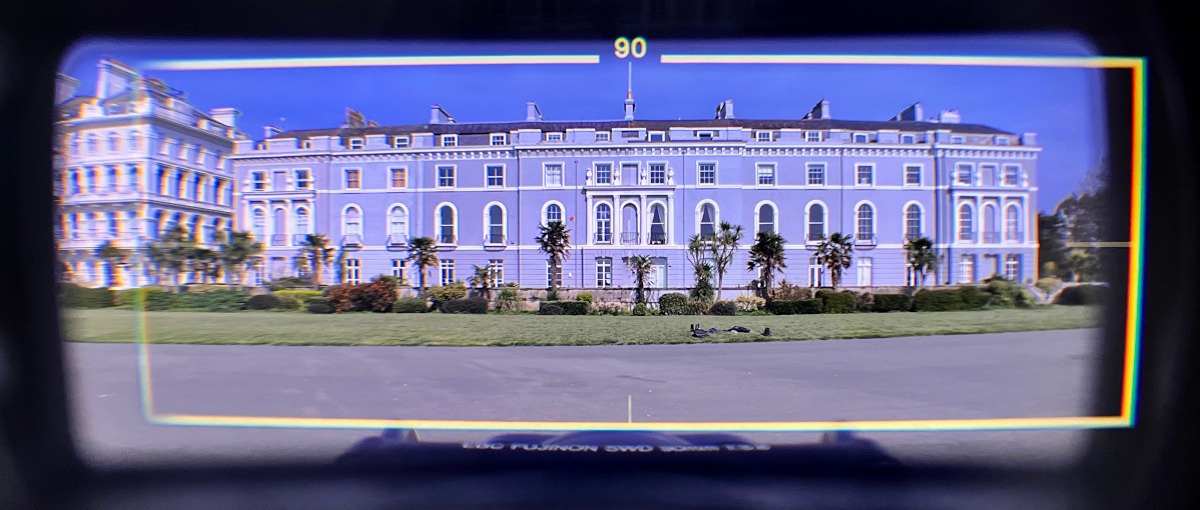
Rather than keeping the camera to our eyes constantly, we used the detachable 90mm viewfinder independently while scouting. This made the process feel more fluid and meant we could visualise the shot before committing to setting up the tripod. It’s a different rhythm compared to modern cameras, slower but more intentional.
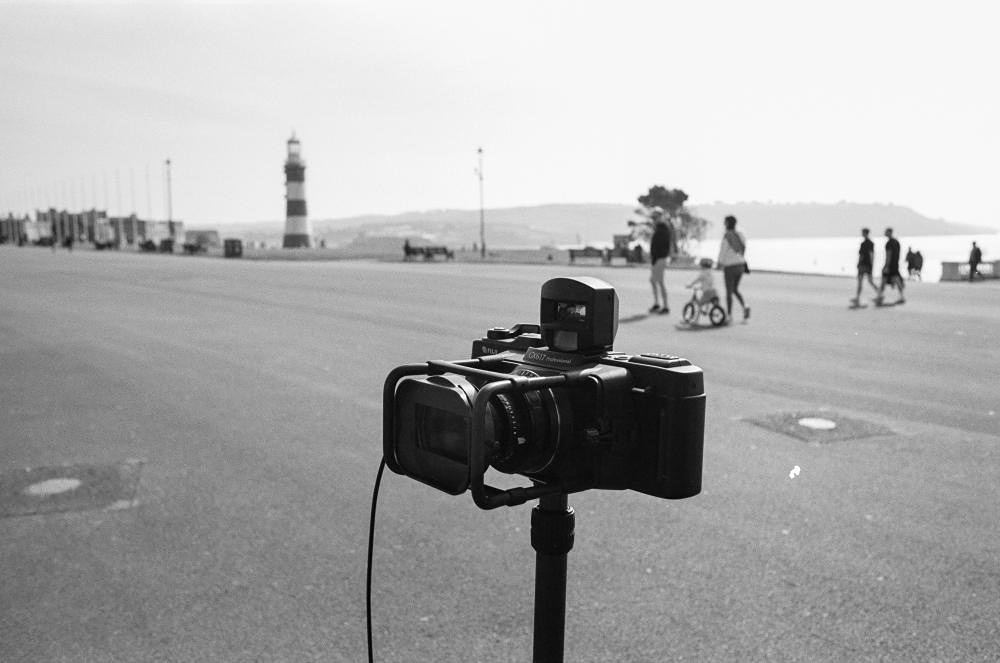
Mounted on a Leofoto LS-324C tripod, the setup struck a surprisingly good balance. The tripod’s lightweight carbon fibre build made it easy to carry across Plymouth Hoe, while its adjustability proved essential on uneven ground. That uneven terrain made one feature of the GX617 particularly valuable…the built in spirit level. It’s a small detail, but when you’re working with such a wide frame, even slight tilts become glaringly obvious. Having that quick visual reference saved time and frustration.
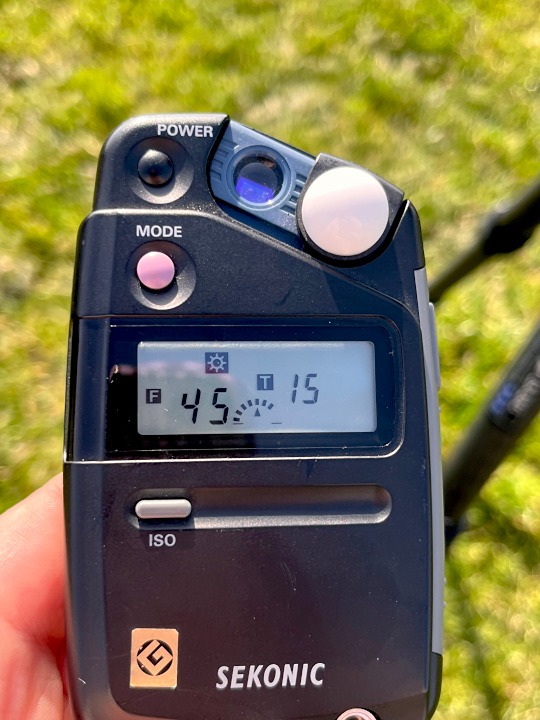
Using a Sekonic L-308 light meter, we metered each scene, then adjusted the shutter speed and aperture on the lens. For the shots we kept the f-stop around the 32-45 mark and focus was set to infinity for most shots, leaning into the depth of field needed for expansive landscapes. This meant the shutter speed was around 1/8 - 1/15 of a second on most shots.
The 90mm Fujinon lens is widely regarded as the standard choice for this system, offering a broad field of view without extreme distortion. Combined with the Fuji Centre Filter GX617 90mm ND-2X Filter, it helps balance exposure across the frame. This is crucial given how light falloff can affect ultra wide images. The addition of the Fuji lens hood also helped maintain contrast in the bright coastal light.
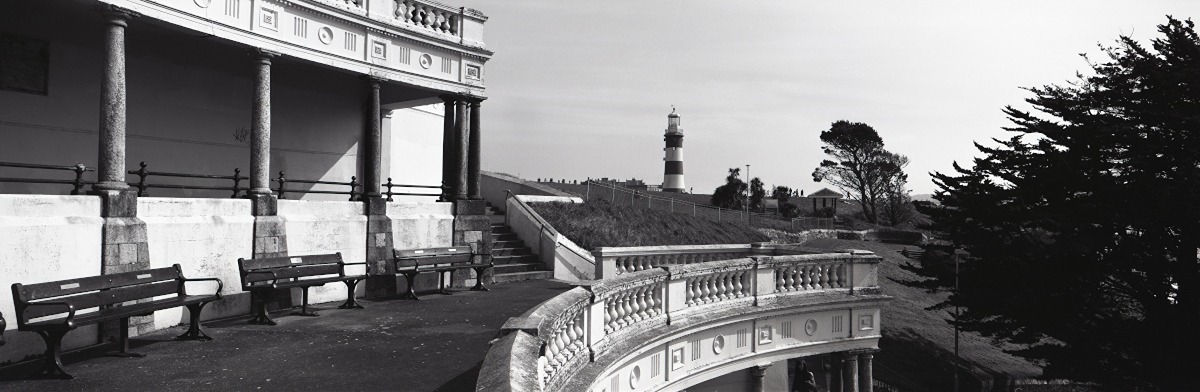
We shot two rolls of film, Kodak Ektar and Ilford FP4, both excellent choices for the sunny conditions. Ektar brought vibrant colour and fine grain, while FP4 delivered classic monochrome tones with beautiful latitude.
The workflow became a rhythm:
Compose the frame
Take a meter reading
Adjust settings
Set the lens
Release the shutter
Advance to the next frame
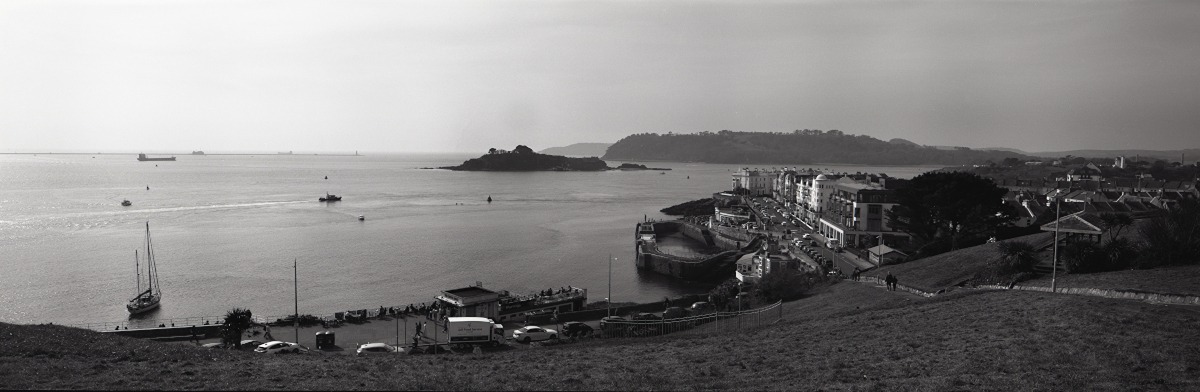
The process was satisfying and felt methodical. That said, the process leaves little room for error. On our final shot, we forgot to advance to the next frame and accidentally set the lens, resulting in a double exposure… a reminder that with fully mechanical systems, discipline is everything.
The GX617 is not a subtle camera. Loading film in the field also proved slightly challenging. Coming from 35mm, the medium format process requires more care and familiarity. It’s not difficult, but it’s certainly less forgiving when you’re outdoors and eager to shoot.
The Fuji GX617 isn’t for everyone and it doesn’t try to be. It’s slow, mighty and entirely manual. But in return, it offers an incredibly rewarding shooting experience and produces negatives of breathtaking scale and detail.
Our morning on Plymouth Hoe highlighted exactly what makes this camera special, the deliberate pace, the tactile controls and the satisfaction of crafting each image step by step. Paired with the 90mm lens and supported by a solid tripod, it becomes a powerful landscape tool. Despite minor hiccups like the double exposure and tricky film loading, the experience was overwhelmingly positive. The GX617 forces you to slow down, think carefully and truly engage with your surroundings.
Shop the camera here
Check out the camera from this review. This camera has been checked, tested and is fully working. The kit includes the EBC Fujinon SWD 90mm f5.6 lens, 90mm Viewfinder, as well as the Fuji 90mm/105mm Lens Hood and Fuji Center Filter 90mm ND-2X 77mm Filter.
Fuji GX617