Pentax K1000
There’s something timeless about loading film into a Pentax K1000. With a roll of Orwo Wolfen NC500, the process was simple and mechanical in the best possible way. Simply pop open the camera back, drop in the canister, pull the leader into the take up spool, wind and fire until the sprockets engage, then close up. The counter sets automatically once the door has shut and you are ready to start capturing photographs.
Released in 1976 and produced well into the late 1990s, the Pentax K1000 earned its legendary reputation as a durable, no nonsense 35mm SLR ideal for students and professionals alike. It features a fully mechanical shutter and a built in needle style light meter, powered by a single LR44 battery solely for metering. The meter is simple to read: just center the needle and you’re ready to shoot. If the needle is toward the ‘+’ it will be over exposed and if the needle is toward the ‘-’ it will be underexposed.
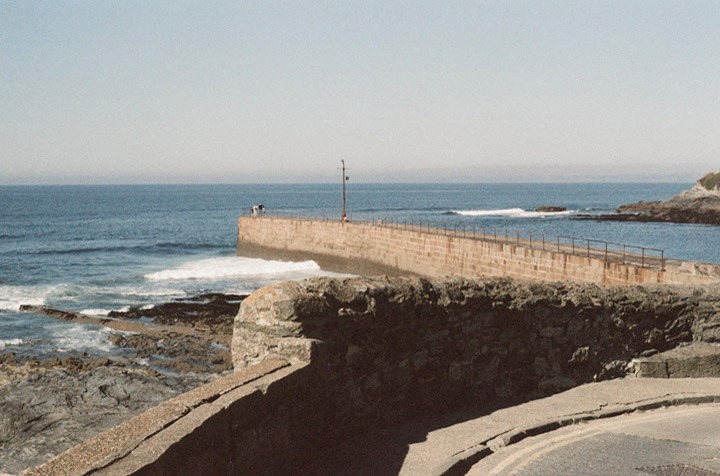
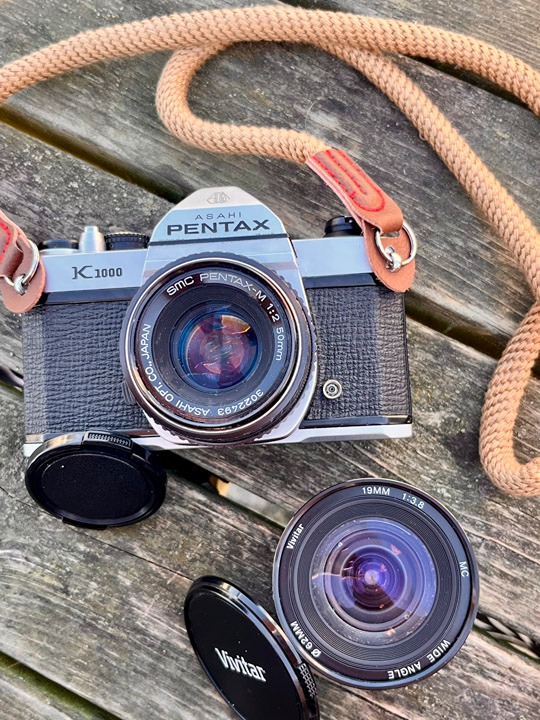
For this outing around Porthleven harbour, I paired the body with two very different lenses: the SMC Pentax 50mm f2 and the Vivitar 19mm f3.8. For each frame, I captured one first with the 50mm lens, then whilst standing in the same spot, switched the lenses to the 19mm and captured again. The 50mm, a classic lens, gives a natural perspective close to what the human eye sees, making it great for detail shots. In contrast, the 19mm Vivitar is an ultra wide that sweeps a vast amount of scenery into the frame, exaggerating foreground elements and pulling distant features into view. Comparing frames from the two lenses was a great reminder of how focal length dramatically changes composition. You can see the 50mm feels intimate and focused, while the 19mm feels expansive and dynamic.
Compare
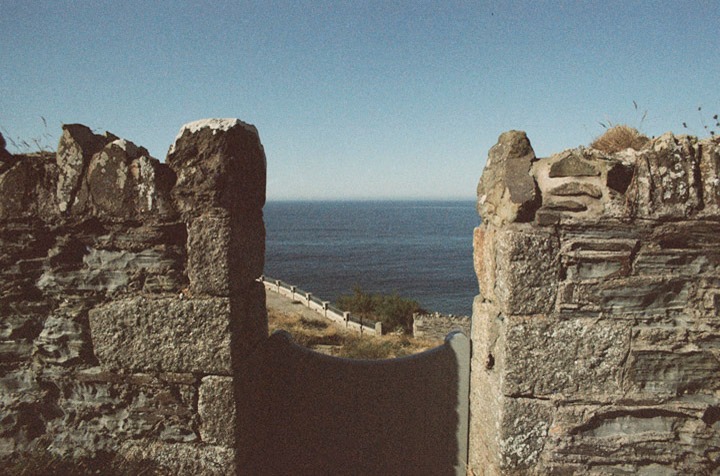
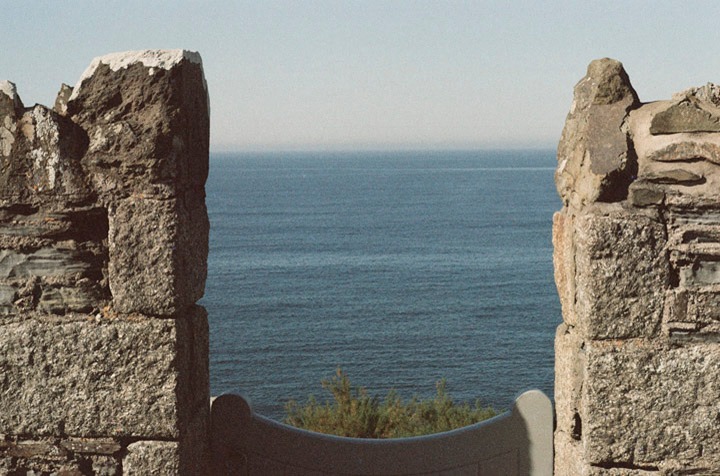
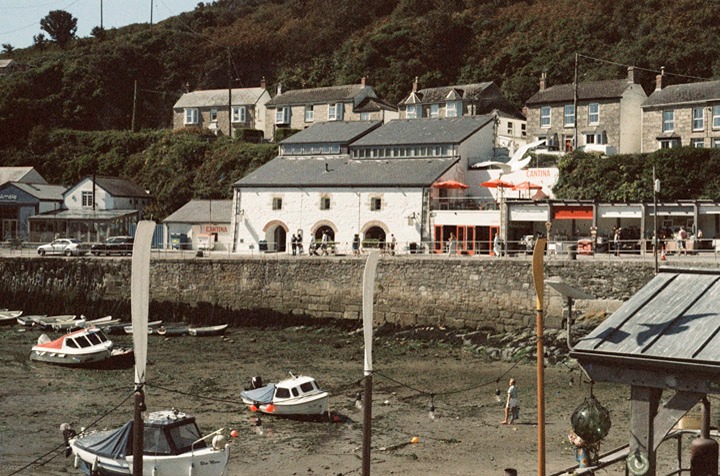
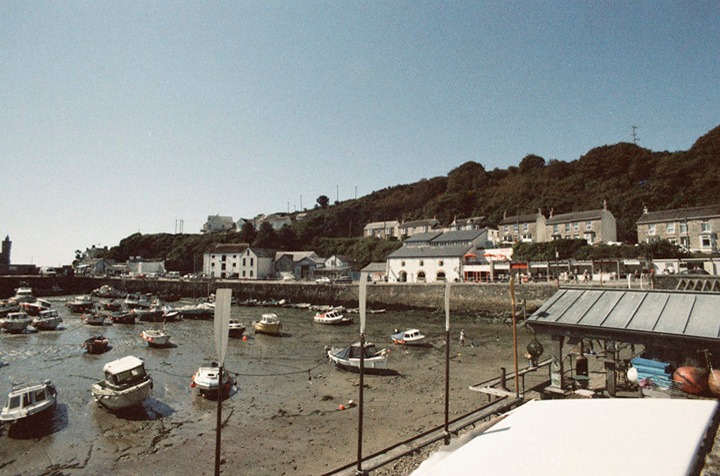
Take for example these two frames, they perfectly demonstrate how lens focal length radically alters the way a scene is captured, even when you’re standing in exactly the same spot.
The photograph shot with the 50mm displays the harbour wall, the boats, and the hillside cottages stack neatly together, and the background appears comfortably close. This lens has a way of compressing space just enough to give scenes a cohesive quality. It’s no surprise that the 50mm lens has long been a favourite for street photographers and documentarians. This lens is sharp, compact and fast, it excels at capturing moments with natural proportions and a sense of familiarity.
By contrast, the photo taken with the 19mm ultra wide angle lens displays same harbour, where every boat and every roofline is given its own breathing room. It has exaggerate depth, pushing the background further away and drawing the eye into the foreground. This is why lenses like the 19mm are so popular for landscapes, architecture and environmental scenes. This lens lets you fit everything in, adding drama and scale, even if it means introducing a bit of perspective distortion.
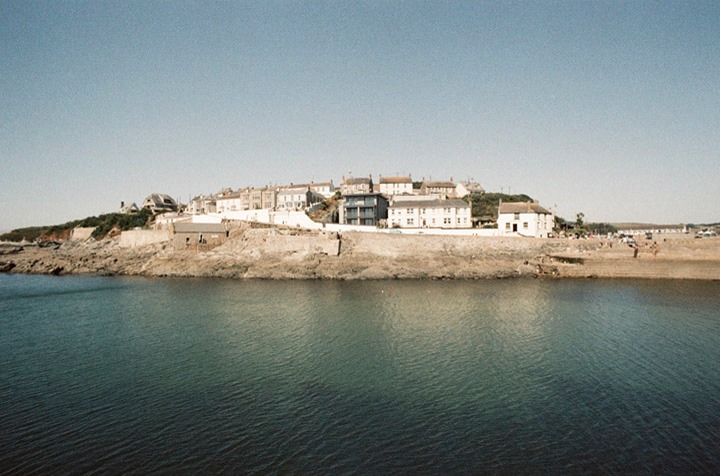
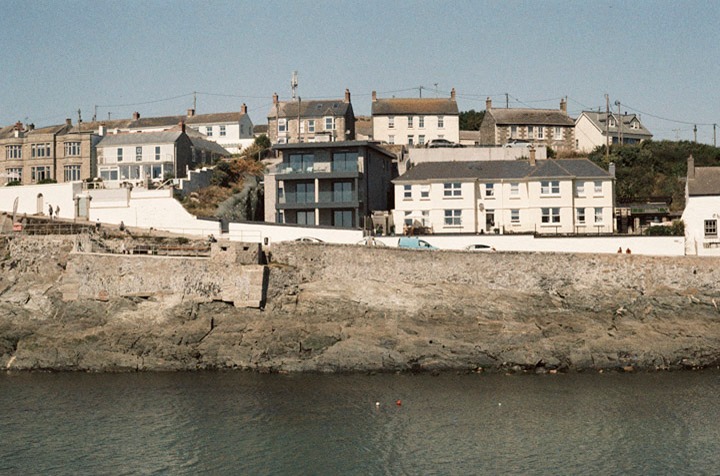
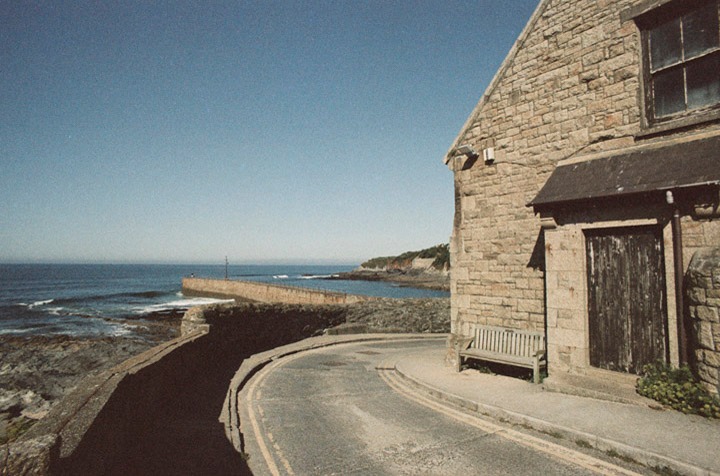
The Orwo Wolfen NC500, a relatively new colour negative film with cinematic roots, was an excellent match for this camera. Known for its muted contrast, gentle grain, and subtle colour rendering, NC500 produced beautifully soft tones of the sea, sky and stone. Blues leaned toward teal, greens were understated and the overall palette had a nostalgic, almost vintage feel. A perfect film for capturing the atmosphere of the Cornish coast.
In use, the K1000 was everything you’d expect from a classic Pentax, it was sturdy, compact and comfortable handheld, with controls that fall neatly under the fingers. The meter made exposure easy to judge. Regarding the focusing, it was precise and simple where everything came into focus in the viewfinder.
In conclusion, shooting the Pentax K1000 with both the SMC Pentax 50mm f2 and Vivitar 19mm f3.8 was a thoroughly enjoyable experience. The two lenses provided distinct perspectives and experimenting with them on the same roll added variety and creative freedom. Combined with the unique rendering of Orwo Wolfen NC500, this setup produced images full of character. The K1000 remains a camera that belongs on everyone’s list to shoot, it is simple, reliable and endlessly rewarding, especially when paired with lenses that encourage you to see the world in new ways.